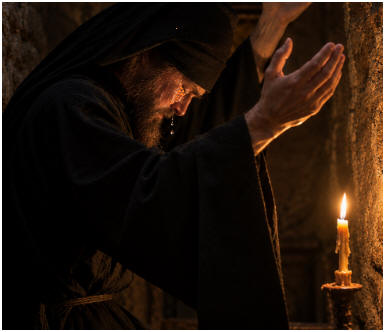
The kinds of tears:
Beneficial, neutral and futile
From a spiritual dialogue with Elder Cleopas Ilie
|
No.214. How many kinds of tears are there, and which of them are
salvific?
Grieving and tears come from seven causes: 1) Out of our love of God, when one contemplates the beauty of divine Creation. These tears are the highest form of tears, for they are filled with joy and divine love. Tears born of the love of God enrich a person spiritually. 2) Out of our fear of God. These have less power than the former; for while tears born of the love of God are those of a son toward his Father, the tears born of fear are those of a servant - a bondservant – who is always afraid in case he grieves his master. Grieving - or the shedding of tears out of the fear of God - intercedes with God for the forgiveness of sins and always precedes the aforementioned tears of love. Grieving out of a fear of God causes a person spiritual pain, much like a red-hot pair of tongs, which wounds one upon contact. 3) Out of our fear of death and the torments of hell. These are beneficial and salvific tears, for, like the previous ones, they bring the fruits of repentance.
4)
Natural tears
- that is, those shed by parents for their children and by children for
their parents.
These kinds are neither good nor bad; in fact, they are often
observed in animals as well.
5)
Tears of vainglory.
These are very dangerous, because the devil places the tears of
vainglory together with the salvific and humble tears, by making people
stand out and being praised by others. 6)
Tears caused by carnal pleasure
– which spring from evil desires, drunkenness, and the remembrance of
wicked events, and so forth. 7) The seventh kind of tears comes from the various needs and hardships of life, such as poverty, bodily wounds and pain, and any form of illness generally.
The first three types of tears are salvific; the fourth belongs
to our human nature - being neither good nor bad - while the remaining
types are not beneficial and are the causes of pains and chastisements.
Consequently, spiritual grieving is twofold: the first aspect is
a perpetual sorrow, both of the nous (mind) and the heart, for our sins;
it is an internal state of humility and an awareness that we are unable
to do as much good as we ought to.
Our heartfelt sorrow for our sins is equivalent to all the works
of virtue combined, and it elevates a person to the second and loftier
kind of tears: the tears of love and of the fear of God.
A certain holy father says that one who feels disgust for his
sins resembles an overcast sky, which soon after brings on rain - that
is, one’s tears.
Tears grant all of us the hope for salvation; they wash away our
sins and bring peace to our conscience.
As Saint
Nicodemus the Hagiorite writes in his book “Invisible Warfare”:
"Being
checked by our conscience is the torment of all torments, whereas our
conscience at peace is the joy of all joys."
Translation : A.N.
|
Last update on : 25-10-2026